Can Invisalign fix crowded teeth in adults? Yes, clear aligner treatment can straighten many crowded adult teeth, particularly where the crowding is mild or moderate. Whether it is right for you depends on how much space is needed, the position of your teeth and the way your upper and lower teeth meet.
Crowded teeth can overlap, rotate or sit out of line because there is insufficient room in the dental arch. You might be unhappy with how your smile looks, find some areas difficult to clean or notice that your teeth have become more crowded with age. The good news is that orthodontic treatment is not limited to teenagers.
At Westbury Dental Care & Implant Centre in New Malden, we assess adult patients who want straighter teeth without conventional metal braces. Here, we explain how Invisalign creates space, what treatment involves, how long it may take and when another orthodontic approach might be more suitable.
What Causes Crowded Teeth in Adults?
Dental crowding happens when teeth do not have enough space to sit in a well-aligned position. Some people have been affected since their permanent teeth emerged, while others notice changes later in life.
Common contributing factors include:
- Jaw and tooth proportions: The teeth may be relatively large for the available arch space.
- Natural tooth movement: Teeth can gradually shift with age, particularly around the lower front teeth.
- Previous orthodontic treatment: Crowding can return if retainers are not worn as recommended.
- Early tooth loss or altered bite: Changes in the surrounding teeth can affect their positions.
Crowding is not always just a cosmetic issue. Tight overlaps can make brushing and interdental cleaning more difficult, sometimes allowing plaque to remain in areas you cannot reach easily. However, straight teeth can still develop tooth decay or gum disease, so good hygiene matters regardless of alignment.
A dental examination helps distinguish simple crowding from problems involving your bite, gum health or jaw relationship.
How Does Invisalign Straighten Crowded Teeth?
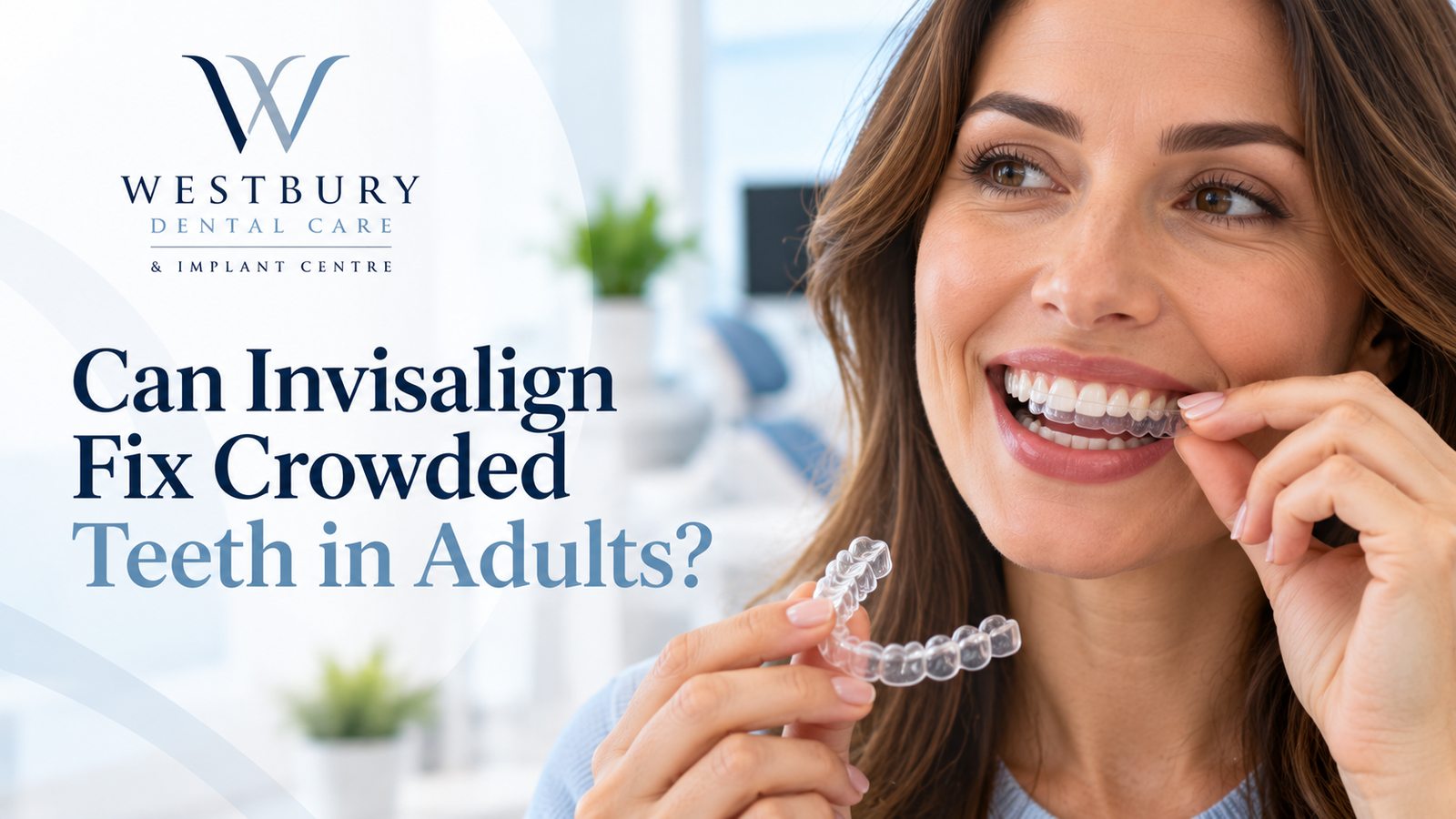
Invisalign uses a sequence of custom-made, transparent plastic aligners. Each aligner is shaped to encourage specific tooth movements, with the next tray continuing the process. Teeth move gradually in response to controlled forces applied through the aligners.
Your treatment is planned around the position of individual teeth, the amount of space required and the bite we aim to achieve. The aligners are removable, which can make eating and routine brushing more convenient than with fixed braces.
Our Invisalign treatment includes an assessment to determine whether clear aligners can address your particular alignment concerns.
Creating room for overlapping teeth
Teeth cannot simply be pushed into an arch that has insufficient space. Depending on your anatomy, your treatment plan may make small changes to the dental arch, move certain teeth into more favourable positions or use carefully controlled enamel reduction. The aim is to create enough room without compromising the stability of your bite.
Guiding individual tooth movements
Some teeth need to rotate; others need to tilt or move bodily into a new position. Aligners are designed to achieve these movements in stages. Your dentist will monitor progress and adjust the plan where necessary, rather than assuming every tooth will respond at the same speed.
How Is Space Created Without Removing Teeth?
For many mild-to-moderate cases, sufficient space can be created without extracting healthy teeth. The most suitable method depends on the available bone, gum health and the extent of crowding.
Limited dental arch expansion
Aligners may move selected teeth outwards slightly, increasing the space available within the dental arch. In adults, this usually involves moving teeth within their supporting bone, not widening the underlying jawbone itself. Excessive outward movement can be unsuitable where gum or bone support is limited.
Interproximal reduction (IPR)
IPR involves removing very small, measured amounts of enamel from the sides of selected teeth to create additional space. A dentist or orthodontist uses specialised instruments to carry this out conservatively where appropriate.
The procedure is often well tolerated and may not require anaesthetic, although some patients notice pressure or sensitivity. Because enamel removal is permanent, your clinician should explain the proposed amount, reasons and alternatives before treatment.
Tooth-coloured attachments
Some movements require small composite-resin attachments bonded temporarily to certain teeth. These help the aligners grip and guide teeth more effectively. They are designed to be discreet, though they may be visible at close range, and they are removed after active treatment.
Which Types of Crowding Can Invisalign Correct?
Mild or moderate crowding is often well suited to Invisalign, particularly where there is enough room to align teeth through modest movements. Treatment may involve one or both arches, depending on your bite and the overall plan.
Examples can include slightly overlapping lower incisors, rotated front teeth or crowding that has returned after previous brace treatment. However, appearances alone cannot tell us whether a particular case will be straightforward.
What about severe crowding?
More pronounced crowding may require significant tooth movements, extraction planning or correction of a complex bite. Some patients can still be treated with clear aligners as part of a carefully planned approach; others may achieve a more predictable result with fixed braces or combined techniques.
If your teeth are crowded because of a substantial difference between upper and lower jaw positions, aligners alone may not address the underlying problem. A full orthodontic assessment is essential before recommending treatment.
What Happens at Your Invisalign Consultation?
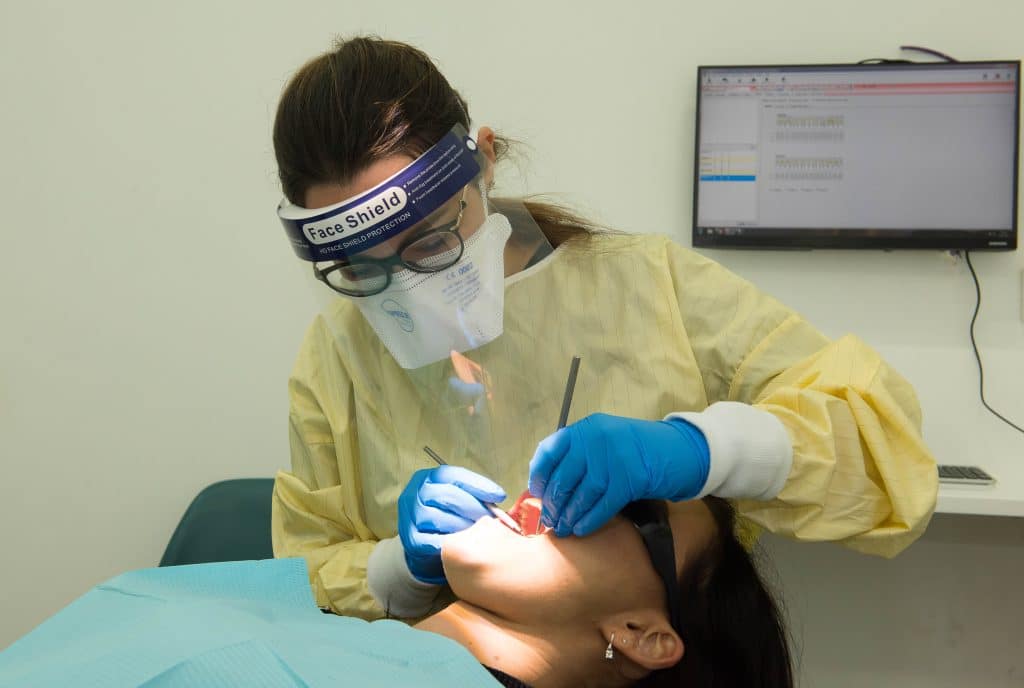
We begin by discussing what bothers you about your smile and what you hope treatment will change. We then examine your teeth, gums and bite, including any previous orthodontic work or dental restorations.
Your assessment may involve photographs, a digital scan or impressions, and X-rays where clinically appropriate. These records help us evaluate available space, tooth positions and the movements required.
A proposed plan should explain:
- Whether Invisalign is suitable for your crowding.
- Whether IPR, attachments or other procedures may be needed.
- The anticipated number of aligner stages and review visits.
- Any limitations, possible risks or alternative treatments.
- Expected costs, retainers and longer-term maintenance.
Our specialist orthodontic services can also be considered when tooth movement or bite correction is more complex.
How Long Does Invisalign Take for Crowded Adult Teeth?
For many adults, treatment may take around six to eighteen months, but this is only a broad estimate rather than a promise. Some simple cases finish sooner, while more involved crowding or bite corrections can take longer.
The schedule depends on how far teeth must move, whether rotations are difficult, your response to treatment and how consistently you wear the aligners. Additional sets of aligners, sometimes called refinements, may be needed to complete certain movements.
Each aligner is generally worn for a period specified by your clinician before changing to the next. You will also attend review appointments so progress can be checked and any problems addressed.
A realistic plan should include more than the time needed to straighten the visible front teeth. Your bite, gum health and the eventual stability of the result are equally important.
How Many Hours a Day Must You Wear Invisalign?
Most Invisalign patients need to wear their aligners for approximately 20 to 22 hours each day, following the individual instructions they receive. That means keeping them in while working, sleeping and carrying out most everyday activities.
Remove the aligners when eating, drinking anything other than plain water, and brushing or flossing. Rinse your mouth or clean your teeth before reinserting them where possible, and store the trays in their protective case when not in use.
If you regularly leave them out for extended periods, your teeth may not move as planned. The next set of aligners might then fit poorly, delaying progress or requiring changes to the treatment schedule.
Some mild pressure or temporary speech changes can occur when you start wearing aligners or move to a new set. Persistent pain, broken trays or an aligner that no longer fits should be discussed with your dental team.
What Are the Benefits and Limitations for Adults?
Clear aligners are appealing because they are discreet and removable. Adults often appreciate being able to attend meetings, social occasions and family events without prominent brackets and wires. You can also brush and floss normally once the trays are removed.
However, these practical advantages do come with responsibilities. Successful treatment relies on wearing the aligners as directed, maintaining clean teeth and trays, and attending reviews. Attachments may be necessary, and Invisalign cannot guarantee that every complex movement will be achieved without refinements or an alternative approach.
Orthodontic treatment also carries risks, including temporary discomfort, gum inflammation if cleaning is poor and, occasionally, changes affecting roots or the supporting tissues. We assess and explain relevant risks before you agree to treatment.
How Much Does Invisalign Cost at Westbury Dental Care?
The cost depends on whether one or both arches need treatment, the difficulty of the movements and the number of stages required. Westbury Dental Care’s published fee schedule lists Invisalign single arch from £2,500 and dual arch at £4,500. These are published figures and should be checked when you receive your individual quotation.
Your treatment plan should explain what is included, such as records, review appointments, refinements and retainers, as well as any additional fees. Comparing quotations is easier when you know whether they cover the same stages of treatment.
As with other private dental treatments, fees vary according to your needs, so the right starting point is an assessment rather than a price alone.
How Do You Keep Your Teeth Healthy During Treatment?
Crowded teeth can already be difficult to clean, and aligners need their own hygiene routine. Brush twice daily with fluoride toothpaste, clean between your teeth each day and rinse or clean the trays as directed. Avoid very hot water, which may distort the plastic.
Good habits are especially important because food residue and sugary drinks can become trapped against teeth when aligners are reinserted. Maintaining good oral health throughout orthodontic treatment helps reduce the risk of decay and inflamed gums.
If you have untreated tooth decay or active gum disease, we may recommend stabilising these conditions first. Keep attending normal dental check-ups and hygiene appointments during treatment.
Will Your Teeth Stay Straight Afterwards?
Teeth can move again after any orthodontic treatment, even when the original crowding has been corrected successfully. Retainers help maintain the new positions once the active aligner stages are complete.
You may be advised to wear a removable retainer, have a fixed retainer bonded behind certain teeth or use a combination. The recommended routine depends on your treatment and may involve long-term, often lifelong, retention.
You should also have retainers checked and replaced when damaged or no longer fitting properly. Continuing to wear them as instructed is an essential part of protecting your investment in straighter teeth.
Our Final Say!
So, can Invisalign fix crowded teeth in adults? For many people with mild-to-moderate crowding, the answer is yes. Custom clear aligners can gradually reposition overlapping teeth, sometimes with help from attachments, careful space creation or interproximal reduction. More complex cases may benefit from fixed braces or another orthodontic approach.
The best option depends on more than how your smile looks. Healthy gums, a suitable bite, realistic treatment expectations and your willingness to wear aligners consistently all matter. Retainers are also essential for maintaining the result once treatment ends.
At Westbury Dental Care & Implant Centre in New Malden, we can assess your crowded teeth, explain the available options and provide a personalised treatment plan. If you are considering Invisalign as an adult, contact our team to arrange a consultation and discuss the next steps towards a straighter smile.